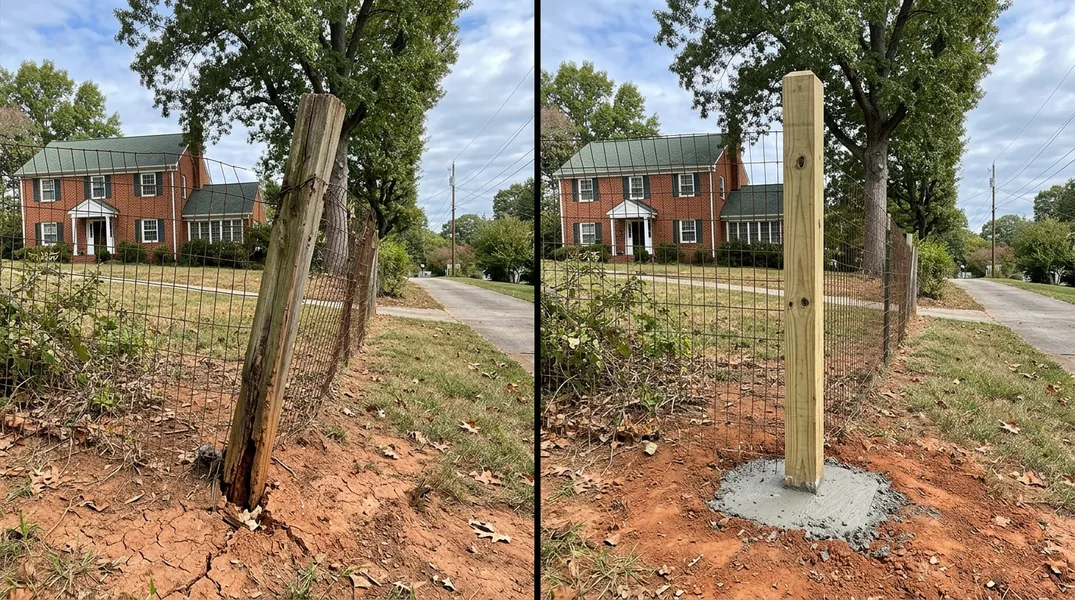
The Richmond Fence Problem: Why Leaning Happens Here
If you own a home in Richmond, you've likely noticed that fences around the area have a tendency to lean, tilt, or gradually shift out of plumb over time. This isn't a coincidence, and it's certainly not a sign of poor initial installation. Richmond's unique geography and soil conditions create the perfect storm for fence problems that homeowners in other regions rarely face.
The primary culprit behind leaning fences in our area is the region's famous red clay soil. This clay-heavy composition, which gives Richmond its distinctive rusty-colored earth, expands and contracts dramatically with moisture changes. During wet seasons, the clay swells, pushing against fence posts and destabilizing them. When dry conditions arrive, the soil shrinks, leaving gaps and allowing posts to shift. This constant movement, repeated year after year, gradually forces fence posts out of their original vertical position. Combined with Richmond's rolling terrain, where many properties sit on noticeable slopes, the problem becomes even more pronounced on hillside installations.
Red Clay Soil and Fence Post Movement
Red clay is notoriously problematic for fence stability. Unlike sandy or loamy soils that drain well and remain relatively stable, clay soil holds moisture like a sponge. When it rains heavily, which happens frequently in Virginia, the clay absorbs water and expands. This expansion creates enormous lateral pressure against buried fence posts. The post, which was firmly anchored when the ground was dry, suddenly experiences forces pushing it sideways. Homeowners often don't notice this movement happening in real time, but over the course of several seasons, the cumulative effect becomes visible as a noticeable lean.
The problem reverses itself during dry spells. As the red clay dries out, it shrinks significantly, creating voids around the post. The post, which was being held in place by pressure, loses that support and can settle or tilt further. This freeze-thaw-like cycle (except with moisture rather than temperature) is one of the primary reasons Richmond homeowners experience leaning fence issues so frequently. Posts that were perfectly vertical when installed may lean noticeably within just three to five years if the soil conditions aren't managed properly during the original installation.
Slopes, Drainage, and Accelerated Deterioration
Richmond's topography adds another layer of complexity to fence longevity. Many properties in the area sit on hillsides or have significant grade changes. When a fence is installed on a slope, water naturally flows downhill along the fence line, concentrating moisture around the base of posts on the downhill side. This creates an environment where posts are constantly wet, dramatically accelerating wood rot. Even if a fence post was installed with proper concrete footings, the relentless moisture exposure on sloped terrain can cause the wood to deteriorate much faster than on level ground.
Additionally, gravity works against posts on slopes. The downhill force on a fence installed on an incline is different from that on level ground. Posts experience not just vertical pressure from their own weight and the fence panels, but also a constant downslope pull. This is why fence post replacement is often necessary sooner on hillside properties than on flat lots. Homeowners in Glen Allen, Tuckahoe, and other elevated areas of the greater Richmond region frequently deal with leaning fence problems that are directly tied to their property's slope.
Rotted Posts: The Hidden Enemy Behind Leaning Fences
While soil movement and slopes are significant factors, rotted fence posts are often the root cause of severe leaning. Wood naturally absorbs moisture, and in Richmond's humid climate with red clay soil that traps water, posts can begin to rot from the inside out long before the damage becomes visible. Rot typically starts at or just below ground level, where the post is in constant contact with moist soil. The wood weakens gradually, losing its structural integrity until it can no longer support the weight of the fence panels and resist the lateral forces pushing against it.
Once rot sets in, a leaning fence is usually just the beginning of the problem. A rotted post that appears to be holding the fence up may fail suddenly, especially during high winds or heavy snow loads. This is why fence post repair often means complete fence post replacement rather than simple realignment. If you notice your fence leaning, it's critical to have the posts inspected for rot. What looks like a straightforward alignment problem may actually be a warning sign that the structural foundation of your fence is compromised.
Leaning Fence Repair: Solutions for Richmond Homeowners
The good news is that leaning fence repair is entirely manageable when addressed promptly. The first step is determining whether the lean is caused by soil movement, rotted posts, or a combination of both. If posts are still structurally sound and the lean is due to clay expansion and contraction, re-setting the posts deeper with proper drainage considerations can solve the problem. This involves removing the fence panels, extracting the existing posts, digging deeper holes, and reinstalling posts with concrete that accounts for Richmond's unique soil conditions.
However, if rot is present, replacement is the only reliable solution. Attempting to repair or reinforce a rotted post is temporary at best and dangerous at worst. Modern Wood & Privacy Fence Installation in Richmond should incorporate concrete footings that extend below the frost line and include proper drainage materials to minimize moisture accumulation around the post base. Some homeowners also choose to upgrade to Vinyl & PVC Fence Installation, which eliminates rot concerns entirely, though this represents a larger investment than repairing an existing wood fence.
Prevention: The Best Strategy for Long-Term Fence Stability
The most cost-effective approach to avoiding leaning fence problems is prevention. During the initial installation phase, proper site preparation is essential. Drainage around fence posts should be carefully planned, especially on sloped properties. Posts should be set deep enough to resist movement while still accounting for the specific soil composition of your property. In Richmond, this often means going deeper than standard recommendations to anchor posts below the zone of maximum clay expansion and contraction.
Regular maintenance also plays a crucial role in preventing leaning fences. Inspect your fence annually, particularly after heavy rains or during dry spells. Look for signs of rot, soft spots in the wood, or visible tilting. Keep gutters and downspouts directed away from the fence line to minimize water concentration. If you notice any leaning or damage early, addressing it immediately prevents the problem from worsening. If you're concerned about your fence's stability or have noticed it starting to lean, reach out to Richmond Fence Pros at (804) 409-8420 for a professional assessment. We can identify the root cause and recommend the best repair or replacement strategy for your specific situation. Contact us today for your free estimate.
Looking for a professional tree service in Richmond? Richmond Fence Pros responds fast for all your fence needs.
Get a Free Quote