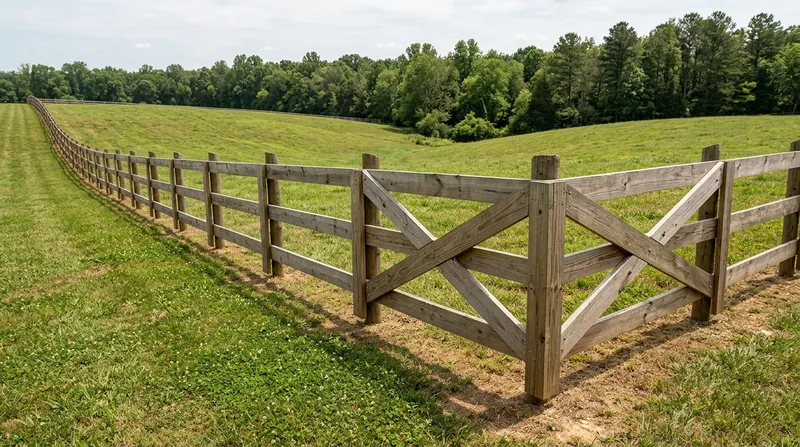




Farm fence installation in Richmond means understanding the difference between residential privacy fencing and the working boundaries that hold livestock and define property lines on acreage. Whether you own a few acres in Powhatan, operate a horse property in Goochland, or manage pasture land in Hanover or New Kent, the fencing you choose has to stand up to daily animal pressure, gate traffic, and the weather that comes with open ground. Richmond Fence Pros has been building and repairing farm and ranch fencing since 2012, and we know the terrain, the animals, and the equipment that moves across these properties. We work with ranch rail, no-climb horse fence, field wire, pipe fencing, and the gates that need to function reliably in all conditions. This guide walks you through the options, the cost, and what to expect when you call for an estimate.
Why Farm and Ranch Fencing Matters in Greater Richmond
Residential fence serves privacy and aesthetics. Farm and ranch fencing serves containment, access control, and property definition on land where animals live and equipment moves. A horse that can push through a fence creates liability and loss. A gate that sticks or fails in winter costs time and frustration every single day. The soil and terrain around Richmond vary widely, especially as you move west and north toward the horse country of Powhatan and Goochland, where property lines run across pasture and woods. Building the right fence for your acreage means understanding what the animals will test, how the gate will be used, and what repair costs look like if you choose wrong.
- Ranch rail and split rail fencing define property boundaries and look good without blocking sight lines across open ground.
- No-climb horse fence prevents animals from getting a hoof or head into the mesh and getting injured or escaping.
- Pipe fencing handles heavy livestock pressure and lasts longer than wood when corrosion is managed with proper coating.
- Field wire and woven fence secure smaller animals and poultry while allowing visibility across the property.
- Durable gates with proper hardware and anti-sag bracing keep working reliably through seasons of daily use.
Each choice trades off initial cost, maintenance, lifespan, and the specific job it does on your land.
Key info: Property lines and fence setbacks in Richmond are governed by local ordinance and any deed restrictions on your property. Before you start, verify your line with an existing survey or have one done by a licensed surveyor. We install on the line you identify. Check with the Richmond city or county building department (or the jurisdiction where your property sits) to confirm whether a permit is required, which varies by location and fence type.
For guidance on local fence regulations and permitting in Richmond, visit Richmond City Government or your county building department.
How We Build Farm Fencing in Richmond: Start to Finish
Farm fencing starts with understanding how you use the land. A riding property has different needs than a cattle pasture, and a small horse paddock near the house looks and functions differently than a remote field boundary. We walk the line, identify obstacles, assess gate placement and swing, and talk through what the animals will do and how often you will use the gates. We then locate utilities with a Virginia 811 call (required by law before digging any post holes) and build the fence to your specifications and local codes. The work is straightforward: set posts in concrete at proper spacing, attach rails or wire, hang gates, and test every moving part before we leave.
- We call Virginia 811 to locate underground utilities before we dig any post holes on your property.
- Posts are set in concrete at spacing that matches the fence type (typically 6 feet for ranch rail, closer for mesh fencing).
- Rails, boards, or wire are attached with fasteners chosen for the material (galvanized nails and bolts for wood, stainless or galvanized hardware for metal).
- Gates are hung with self-closing and self-latching hardware where practical, and we verify smooth operation in both directions.
- We walk the completed fence with you and answer questions about maintenance and seasonal checks.
The whole job is done by the same crew that will be there if you need repair or adjustment later.
Example: A customer in Powhatan with 8 acres and a horse paddock near the house asked for no-climb fencing around the paddock (40 linear feet) and ranch rail to mark the property boundary along the back (350 linear feet). We set posts in concrete, installed the mesh fence with anti-sag bracing, and built the rail fence with a walk-through gate. Total time on site: two days. The paddock fence prevents the horse from getting a leg through, and the rail fence looks clean and functions as a boundary marker.
For details on our other fencing services, including fence repair and gate installation and repair, visit those service pages.
Farm Fencing Methods and Materials
| Fencing Type | Description | Best for |
|---|---|---|
| Ranch Rail | Horizontal wood or composite rails mounted on posts, typically 3 or 4 rails high. Clean sight lines, traditional appearance, moderate maintenance. | Property boundaries, horse paddocks, aesthetic fencing on acreage near the home. |
| No-Climb Horse Fence | Vinyl or wire mesh fencing with small openings that prevent hooves and heads from getting caught. Durable, low maintenance, safe for horses. | Horse paddocks, riding arenas, containment where animal safety is the priority. |
| Pipe Fencing | Steel pipe mounted horizontally on posts, galvanized or powder-coated for corrosion resistance. High strength, heavy-duty containment. | Cattle, livestock under heavy pressure, areas where durability and strength are non-negotiable. |
| Field Wire and Woven Fence | Wire mesh or woven wire fencing supported by posts and tension wire. Flexible, cost-effective, allows visibility across property. | Pasture boundaries, poultry containment, remote property lines where cost and visibility matter. |
| Split Rail | Traditional rustic fence with rails split from logs and mounted on posts. Decorative, low maintenance if pressure-treated, open design. | Rural boundaries, visual charm, properties where a classic farm look is desired. |
Farm and Ranch Fencing Cost in Richmond: What to Expect
Ranch fence installation costs vary widely depending on material, terrain, and what you are building. Ranch rail and split rail fencing typically start around $11 per linear foot for materials and labor, though prices move up with site difficulty, post spacing, and the quality of wood or composite chosen. No-climb horse fence runs higher because the mesh and hardware cost more. Pipe fencing is durable but requires proper installation and corrosion protection. Field wire is the most economical option for large boundaries where visibility matters and animal pressure is moderate. The best way to know your actual cost is to call for a free estimate and have a crew walk the line with you.
Factors that affect the final price include the total linear footage, the number of gates and their size, terrain and obstacles (trees, rocks, slopes), whether posts need to be set deeper or closer due to soil or animal pressure, and the distance from our service area. A job that is 200 linear feet of ranch rail in Glen Allen will cost less overall than 2,000 feet across a remote Powhatan property, but the per-foot rate may be similar. We provide a detailed estimate before starting, and we stand behind our work.
For a detailed pricing overview and to understand what drives costs on your specific property, visit our pricing page. To schedule a free on-site estimate, contact us or call (804) 409-8420.
What to Look for When Hiring a Farm Fence Contractor Near Me in Richmond
Hiring the right fence contractor means checking that they are fully insured, have a track record of farm and ranch work, and understand the animals and equipment that will test the fence. Ask for references from customers with similar properties, and ask to see photos or visit a completed job if possible. Verify that the contractor will pull a Virginia 811 utility locate before digging, and confirm whether a permit is required in your jurisdiction. If your property is in an HOA or has deed restrictions, the contractor should be comfortable reviewing those documents and building to the approved materials and height. A good contractor will also be honest about repair versus replacement: sometimes a gate hinge can be fixed; sometimes the whole gate should be replaced.
- Confirm the contractor is fully insured and can provide a certificate of insurance before work begins.
- Ask whether they are an AFA Member Installer (American Fence Association) or hold similar credentials in fence construction.
- Request at least two or three references from farm or ranch fencing jobs in the Greater Richmond area.
- Verify that they understand Virginia 811 utility locate requirements and will not dig without a locate call.
- Ask about warranty or guarantee on materials and labor, and what maintenance you will need to do to keep the fence sound.
Richmond Fence Pros has been building farm and ranch fencing in the Richmond area since 2012. We are fully insured, an AFA Member Installer, and we work on acreage in Powhatan, Goochland, Hanover, New Kent, and throughout Greater Richmond. Call us for a free estimate, or reach us at (804) 409-8420.
Farm & Ranch Fencing in Richmond: Pricing Guide
| Service | Price | Details |
|---|---|---|
| Ranch Rail Fencing | Starting at $11/ft | Wood or composite rails, posts set in concrete, basic 3-rail configuration; cost increases with terrain difficulty and material grade |
| No-Climb Horse Fence | Starting at $15/ft | Vinyl or wire mesh, anti-sag hardware, safe openings; price reflects material and labor for secure animal containment |
| Pipe Fencing | Starting at $18/ft | Galvanized or powder-coated steel, heavy livestock pressure, durable finish; cost covers material strength and corrosion protection |
| Field Wire and Woven Fence | Starting at $8/ft | Wire mesh on posts with tension wire, pasture boundaries, economical for large acreage; price moves up with mesh gauge and wire quality |
| Gates (single swing, walk-through) | Starting at $400 | Includes hardware, self-closing latch, installation; larger or specialty gates (driveway, double-wide) quoted on estimate |
| Free Estimate | No charge | On-site walk with crew, utility locate coordination, written quote within 24 hours, no obligation to book work |
Indicative pricing, the exact cost depends on square footage, finish, and site access. Free personalized estimate within 24h at (804) 409-8420.


