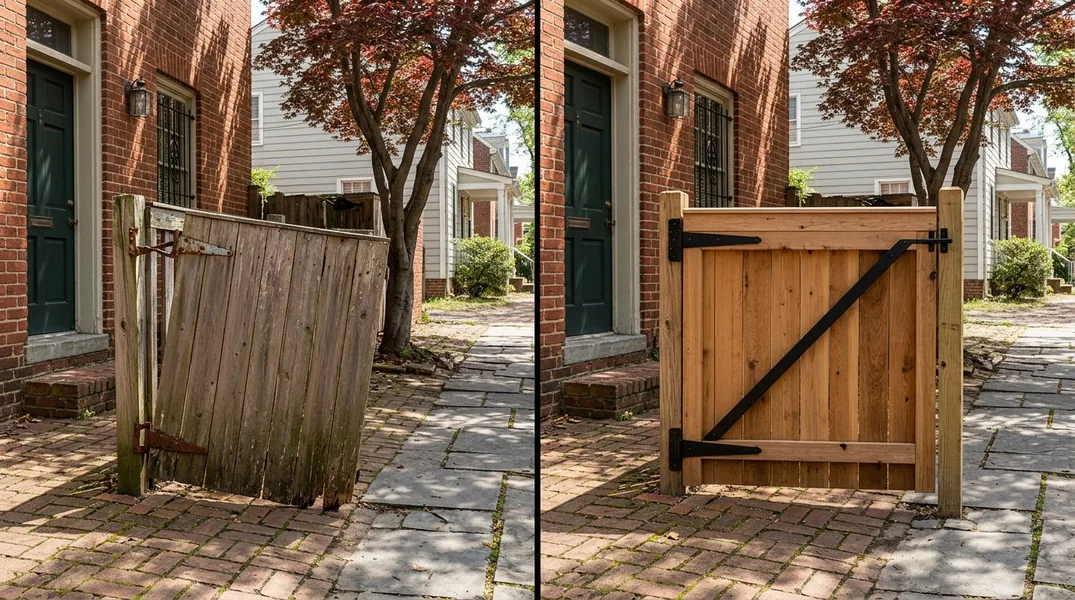
Understanding Piedmont Red Clay and Fence Post Challenges
If you live in Richmond or the surrounding Piedmont region, you already know that our red clay soil presents unique challenges for homeowners and contractors alike. This dense, iron-rich clay is beautiful when it comes to our landscape, but it can be problematic when it comes to setting fence posts properly. The clay's composition makes it prone to expansion and contraction with seasonal moisture changes, which directly affects the stability of your fence.
When fence posts are set in clay soil without proper technique, they can shift and settle unevenly over time. This movement leads to sagging sections, misaligned panels, and ultimately a Wood & Privacy Fence Installation that looks unprofessional and functions poorly. Many homeowners don't realize that the method used to set posts is just as important as the posts themselves, especially in our local soil conditions.
What Is a Fence Post Collar and Why Does It Matter?
A fence post collar is a concrete collar or footing that sits at the base of a fence post where it meets the ground. Think of it as a reinforced foundation that prevents the post from sinking, shifting, or rotating in the soil. In Piedmont clay, this collar serves multiple critical functions. First, it distributes the weight of the fence post and the entire fence structure across a wider surface area, preventing the post from punching through the clay as the soil shifts. Second, it creates a physical barrier between the post and the surrounding clay, reducing direct contact and moisture absorption that can lead to rot and deterioration.
The collar also helps stabilize the post against lateral movement caused by wind, impact, or the natural expansion and contraction of clay soil. Without a proper collar, even a well-installed post can develop movement over time, resulting in a loose fence post that wobbles or leans. This is why professional fence installers in Glen Allen and throughout the region prioritize collar installation as a non-negotiable step in the fence installation process.
Setting Fence Posts in Concrete: The Right Way to Do It
The most effective method for setting fence posts in clay soil involves using concrete to create a stable, permanent foundation. When you pour concrete around a fence post, you're essentially creating a post collar that locks the post in place and prevents the movement that causes problems down the road. The concrete should extend at least 12 inches above the ground surface and should be sloped slightly away from the post to promote water drainage. This slope is crucial because standing water around the post base accelerates rot, especially in wood fence installations.
The depth of your concrete collar matters too. In Piedmont clay, posts should typically be set 24 to 36 inches deep, depending on the height of your fence and local frost line considerations. The deeper the post sits, the more stable it will be against lateral forces. When setting fence posts in concrete, the concrete mix should be firm enough to hold the post vertical while curing, yet workable enough to fill all voids around the post. Many homeowners attempt this as a DIY project, but improper concrete consistency or poor post alignment during curing can result in a loose fence post that requires costly repairs later.
Why Loose Fence Posts Develop and How to Prevent Them
A loose fence post typically develops for one of three reasons: inadequate post depth, poor concrete installation, or clay soil movement that wasn't accounted for during installation. In Richmond, the clay's seasonal expansion and contraction can actually push posts upward in winter and allow them to settle in summer. If the original concrete collar wasn't deep or substantial enough, this natural movement can create gaps and eventually lead to a post that shifts in its footing. Additionally, if the concrete wasn't properly compacted around the post or if the post wasn't held perfectly vertical during curing, the post may never have been stable from day one.
Prevention starts with proper installation technique and understanding your local soil conditions. A quality concrete collar that extends well below the frost line and well above grade provides the best defense against loose fence posts. Regular inspection of your fence, especially after heavy rains or during seasonal transitions, can catch early signs of movement before they become serious problems. If you notice any wobbling, leaning, or separation between the post and the fence panels, it's time to address the issue rather than hoping it will resolve itself.
Fence Post Clay Soil Solutions for Richmond Homeowners
If you're dealing with fence post clay soil challenges in your Short Pump or Richmond property, there are several proven solutions beyond standard concrete collars. One approach is to use a post hole digger to create an oversized hole, then backfill with a gravel base before setting the post in concrete. This gravel layer improves drainage and reduces the direct contact between clay and the concrete collar. Another option is to use a concrete mix specifically designed for fence post installation, which often contains additives that improve strength and durability in clay soils.
For existing fences with loose posts, the repair process typically involves either resetting the post deeper with a new concrete collar or using a post repair kit designed to reinforce and stabilize the existing post. The most effective long-term solution, however, is to work with experienced professionals who understand Piedmont soil conditions and can implement proper installation techniques from the start. Richmond Fence Pros has decades of combined experience setting fence posts in our local clay, and we know exactly what it takes to ensure your fence stands straight and stable for years to come.
When to Call a Professional for Fence Post Installation Near Me
While some homeowners feel confident tackling fence installation as a DIY project, the reality is that improper post setting is one of the most common reasons fences fail prematurely. If you're planning a Wood & Privacy Fence Installation in Richmond or the surrounding areas, it's worth considering whether professional installation is the right choice for your property. Professionals have the proper tools, experience, and knowledge of local soil conditions to ensure every post is set correctly the first time. They also understand the specific challenges that Piedmont red clay presents and know how to overcome them.
The cost difference between a DIY installation that fails and requires major repairs versus a professional installation that lasts 20+ years is often negligible when you factor in long-term value. If you're uncertain about your soil conditions, the proper depth for your posts, or the correct concrete mix for your area, that's a clear signal that professional help is warranted. Contact Richmond Fence Pros today at (804) 409-8420 to discuss your fence project and get a free estimate. We'll assess your property, explain the best installation method for your soil conditions, and deliver a fence you can trust.
Looking for a professional tree service in Richmond? Richmond Fence Pros responds fast for all your fence needs.
Get a Free Quote