Fence Company in Richmond, VA: Installation, Repair & Gates
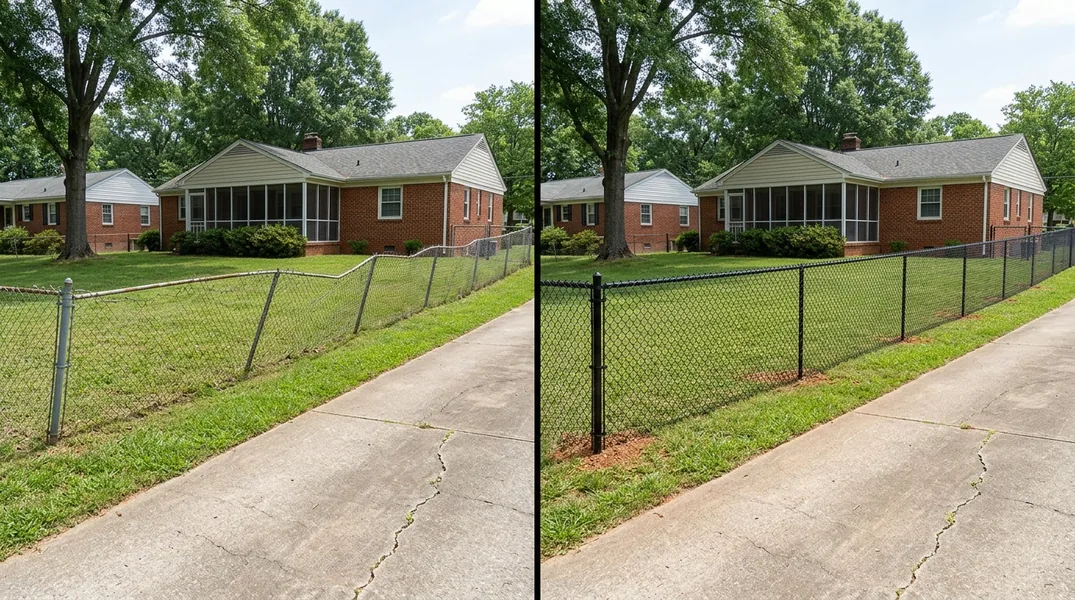
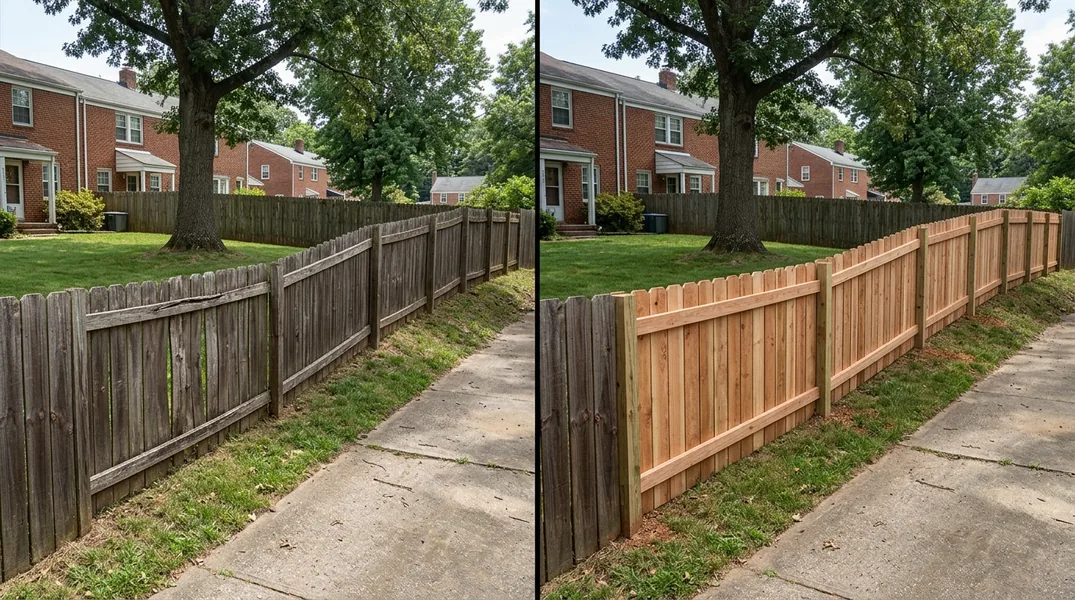
Richmond Fence Pros serves homeowners searching for a fence company near me in Richmond and throughout the surrounding areas, including Tuckahoe, Glen Allen, Short Pump and Midlothian. We handle the full scope of fence work: new installation in wood and privacy fence, vinyl and PVC, chain link and aluminum and ornamental iron; repair of existing fences and posts; gate installation and repair; and recovery from storm damage. The same crews do the work, and we know the conditions that affect fence life in this market.
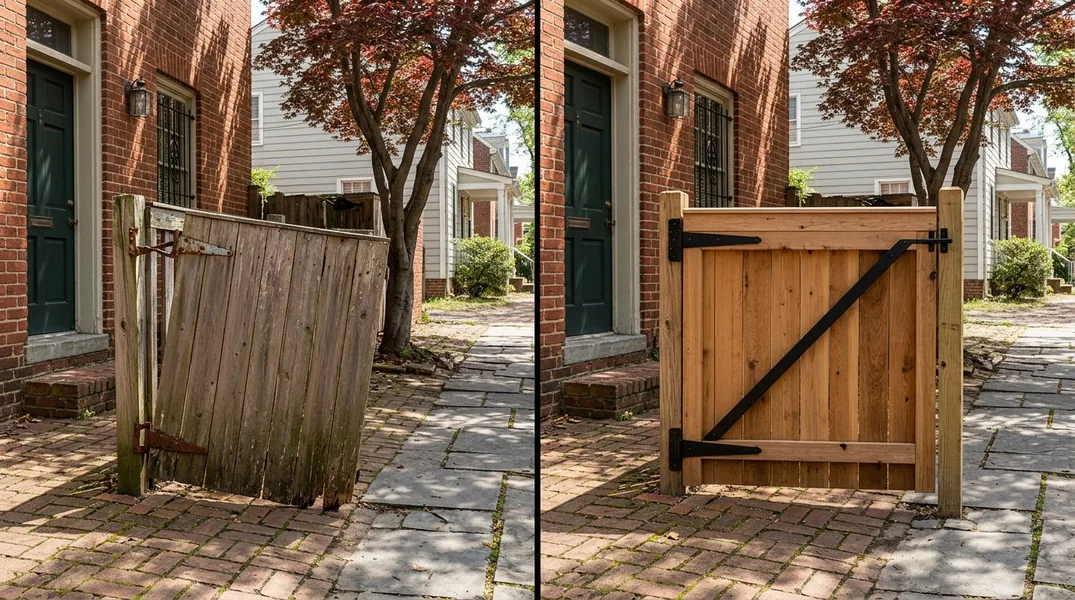
Most of the single-family housing in Greater Richmond is fenced, and most of those fences face the same problems: posts that lean out of plumb, ground-line rot, and gates that sag or drag. We diagnose what is actually failing, quote repair when it makes sense, and recommend replacement when the fence has reached end of life. Call (804) 409-8420 for a free estimate.
Why Fences Lean in Richmond: Clay Soil and Rotted Posts
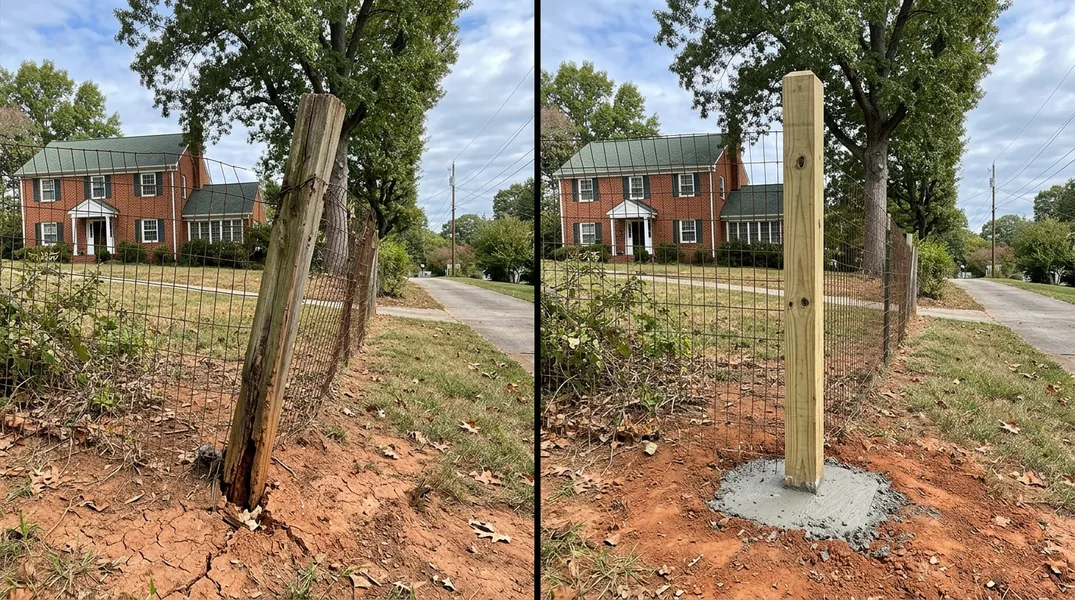
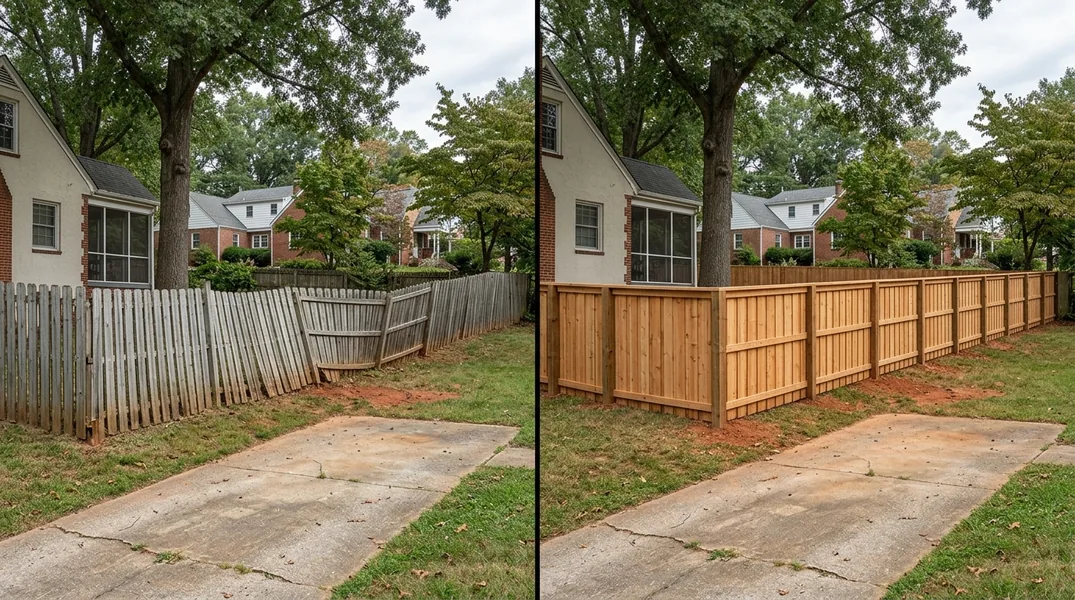
A fence leans because the posts that hold it have moved or failed. In this region, the most common cause is a post that has worked loose in its footing over time, or wood that has decayed at the ground line where moisture keeps it damp year-round. Expansive clay soil naturally swells when wet and shrinks when dry, and that movement cycles through the seasons. A post set in a sound concrete footing will stay put; a post in a footing that has heaved, or a post whose wood has rotted at the base, will rack out of plumb. Once a post leans far enough, the pickets and rails above it follow, and the whole section loses its strength.
We assess a fence by walking the entire line, not just the section a homeowner called in about. We test every post by hand and check whether the concrete footings themselves have lifted or settled, or whether the wood inside the footing has failed. This tells us whether we are looking at a few bad posts in an otherwise sound fence, or a fence that has reached the end of its life. A fence with sound pickets, rails and stringers but a handful of rotted or heaved posts is worth repairing. Resetting or replacing those posts saves the rest of the structure and costs far less than tearing the whole thing down. A fence where the posts have decayed along the entire run, or where multiple footings have heaved, is at end of life, and repairing it section by section over the next few years will cost more than replacing it once. We quote both options when both are real, and we explain the math plainly.
On rotted wood: we replace wood that has decayed at the ground line. Moisture at the base of a post is the cause. We do not perform termite or pest inspections, apply chemical treatments, or carry out pest control, which is a separate regulated trade. If a post has failed, we replace it. Call (804) 409-8420 to have the fence assessed, or request a free estimate online.
Storm Damage Fence Repair in Richmond
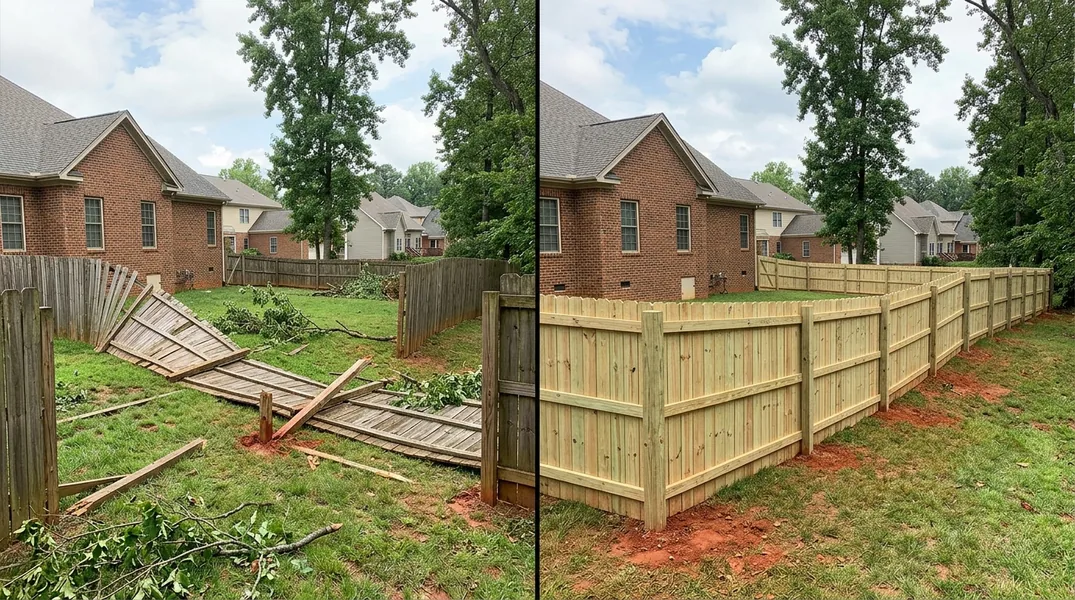
Severe wind and storms can push entire fence runs over on the same line, snap posts at grade, or tear panels away. When that happens, rebuilding is a chance to do it better. A fence that comes back after a storm should come back with posts set deeper, in concrete, and with hardware that is sized for the load. We provide a free damage assessment, take photographs of each section, and prepare a written estimate that you can present to your insurance carrier if you choose to file a claim. We help you document what happened and what it will cost to repair or replace.
Coverage decisions rest with your insurance company, not with us. We do not act as adjusters, do not negotiate on your behalf with your carrier, and do not promise that any repair will be covered or that a claim will be approved. What we do is give you an honest picture of the damage and a price to fix it. If you have questions about whether your policy covers fence damage, contact your insurer directly. Storm damage fence repair is one of our core services, and we are ready to help when you need it.
Cedar, Pine, Vinyl or Chain Link: Choosing for This Climate
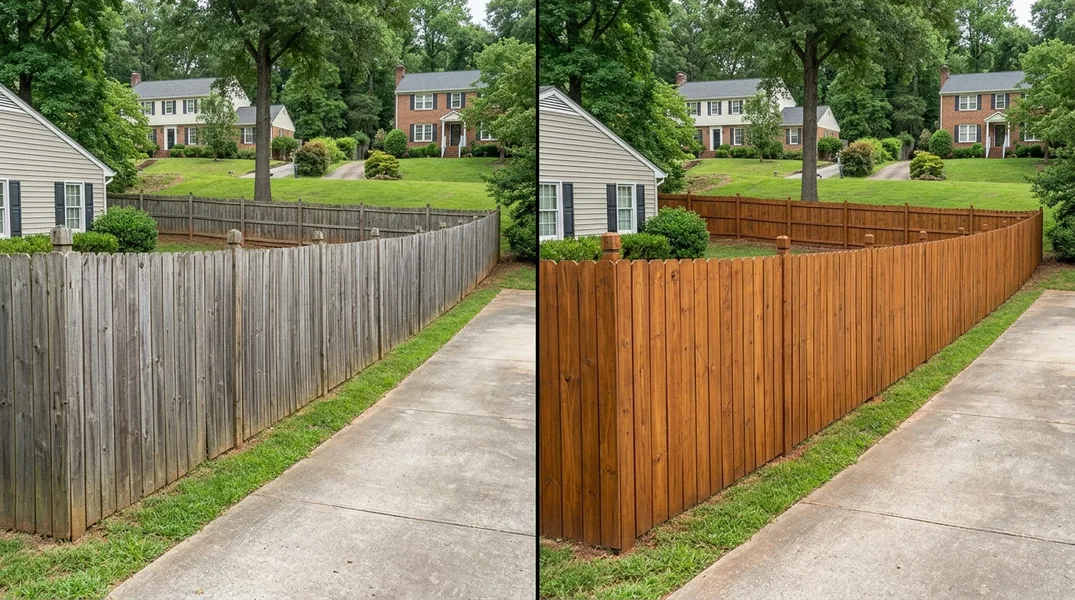
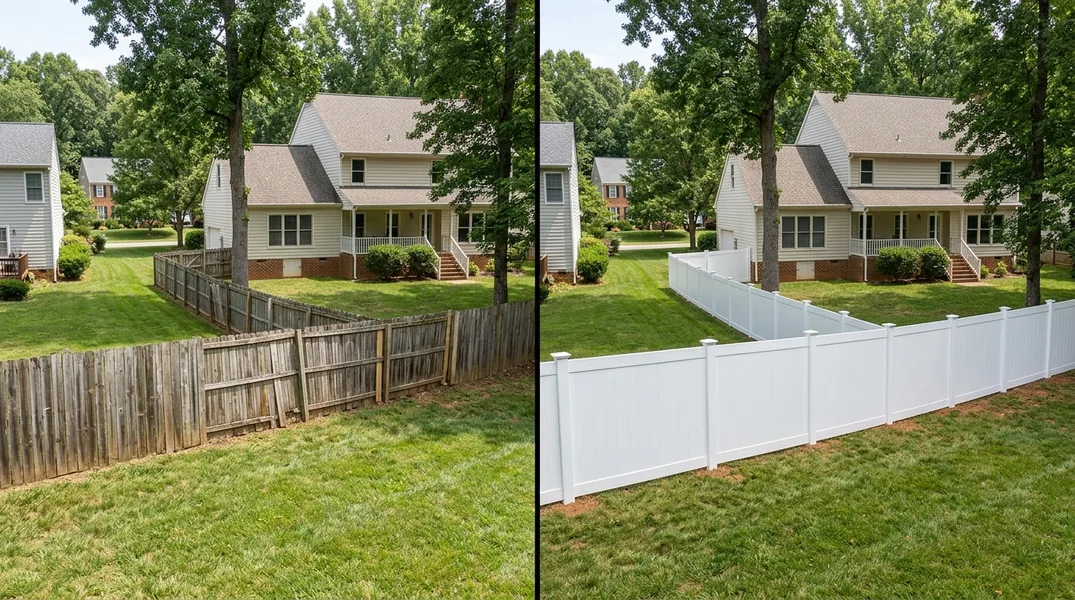
The material you choose depends on your budget, how much maintenance you want to do, and what you want the fence to do. Wood privacy fences in cedar or pressure-treated pine offer privacy and a natural look, but they require maintenance. Cedar is beautiful and resists rot naturally, but it needs cleaning and re-staining every two to three years under this sun and humidity to stay that way. Pressure-treated pine is a solid budget option and will hold up well if you commit to the same staining cycle. Vinyl offers low maintenance and will not rot or splinter, making it a good choice for busy homeowners, though it cannot be stained or painted if you want to change its look later. Chain link is the toughest per dollar, and the gauge of the wire and the mesh size determine how long it will last and how much it will sag over time. Galvanized chain link resists rust better than black powder-coated, though both will fade in the sun. Aluminum and ornamental iron are ideal for front yards and pool areas where you want a finished look and the ability to rack the panels to follow a slope.
Every fence is quoted by the linear foot, and the actual cost depends on what we find on site: slope, access for equipment, whether there is an old fence to remove, and how many gates you need. We measure and quote on site so you know the real number before we start. See our pricing page for typical ranges, and call for a site visit and detailed estimate.
Permits, HOA Rules, Property Lines & Pool Barriers
Permit requirements, height limits, setback rules and material restrictions vary by city and county across Greater Richmond. In most jurisdictions a fence permit is required before installation, and many cities in the area set maximum heights for front-yard fences and require greater setbacks from corner lots to preserve sight lines. If your property is in a master-planned community with an HOA, architectural approval is usually required before you build, and deed restrictions commonly govern the height, material and color of the fence. It is worth checking with your HOA and the local building department before you start, so there are no surprises when the work is done. We work from the property line you identify, using your existing survey or plat. Determining a property boundary is the work of a licensed land surveyor, and we do not offer boundary determinations or property surveys. If you are uncertain where your fence line should be, a surveyor can confirm it for you. It is also worth discussing the project with neighbors in writing beforehand, especially if the fence is on or near a shared property line.
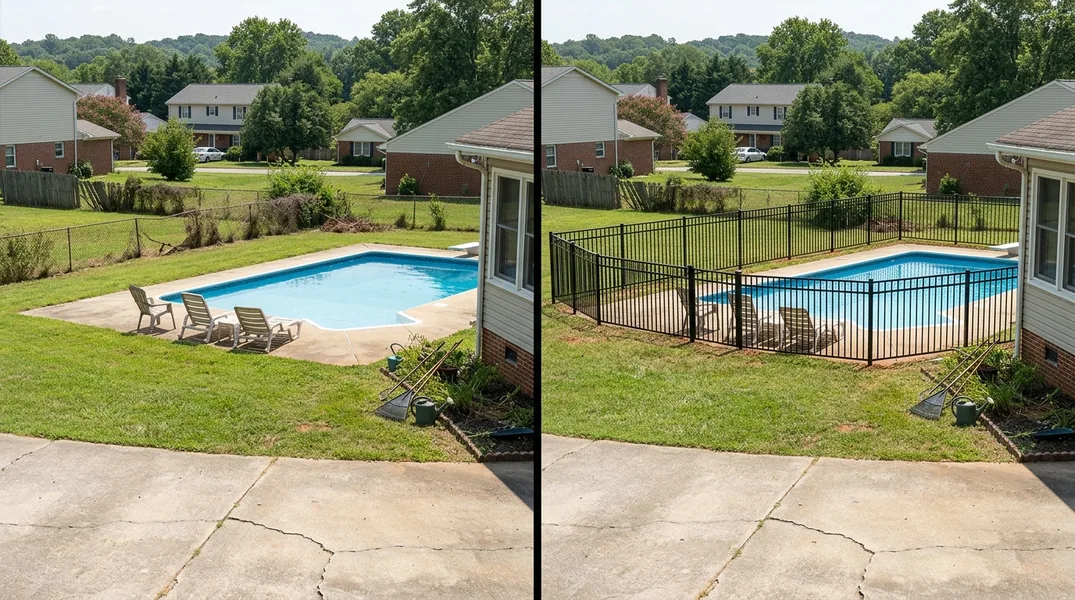
Pool fences are installed to meet the pool barrier codes that apply at your address, with self-closing self-latching hardware on all gates. Final determination of compliance rests with your local building official, and we do not certify compliance or act as a pool barrier inspector. A barrier meets a legal requirement but does not replace active supervision of children. Before digging post holes, we request Virginia 811 utility locates to mark the location of underground utilities operated by participating providers. Locates do not mark private lines such as irrigation or landscape lighting, so please let us know if you have those on your property. Requirements vary by jurisdiction and change periodically. Always verify current rules with the Richmond building department and your HOA before starting your project. Call for a free estimate and we will help you understand what applies to your site.
Ready to get started? Richmond Fence Pros serves in Richmond and surrounding areas. Book your free on-site estimate today.
Get Your Free Estimate